Parallax animation from a photo: stills with real camera motion
You know the documentary trick where an old photograph slowly comes alive, the subject drifting against the background as an invisible camera glides? That is 2.5D parallax. StereoGen creates that animation from a single photo — no layer-cutting in After Effects, no masking marathon.
Try it free — no signup Free watermarked 768px preview. Full-resolution, watermark-free export for €2.99.
How a still picture starts to move
1Depth estimation
A depth-estimation neural network analyzes the photo and assigns every pixel a distance, rebuilding the scene's geometry from a single frame.
2A virtual camera path
A camera is flown through that reconstructed space — a gentle sideways drift, a slow orbit, or the dolly-zoom: the Hitchcock move where the camera pushes in while the lens zooms out.
3Frame-by-frame view synthesis
Each frame of the animation is rendered from its own viewpoint. Near objects travel farther across the frame than distant ones, which is exactly what makes the motion feel dimensional instead of flat.
Made for editors and storytellers
Parallax animation is the quickest way to give still material a filmic pulse: archive photos in a documentary timeline, an establishing mood shot built from a landscape, an interlude in a music video, a real-estate exterior that breathes instead of sitting frozen. Pan-and-zoom moves every pixel together; parallax moves the world in layers, which is why audiences read it as depth rather than as a slideshow.
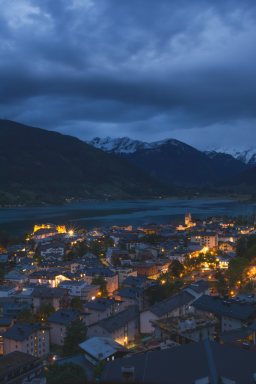
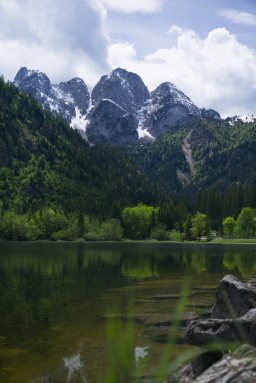
Preview the motion before you export
Every upload starts free: a watermarked 768px preview plus all of StereoGen's interactive views. The Live 3D view runs in your browser with WebGL, so you can push the scene around yourself and judge how far the depth will carry a camera move — on your own device, in real time. When a clip earns its place on your timeline, the €2.99 unlock exports it at full resolution with no watermark and a commercial license, so client work and monetized videos are covered. The watermarked free tier is what keeps experimenting unlimited and risk-free.
Frequently asked questions
What is a parallax animation?
A short clip in which a virtual camera moves through a still photo. Because the scene has a depth map, nearby objects shift more than distant ones — the parallax your eyes expect from real motion — so the photograph feels three-dimensional.
How is this different from the Ken Burns effect?
Ken Burns pans and zooms across a flat image, so every pixel moves together. A parallax animation moves a camera through reconstructed depth, so the foreground separates from the background. It is the difference between sliding a postcard and walking past a window.
What is the dolly-zoom move?
The vertigo effect from cinema: the camera moves forward while the lens zooms out, so the subject holds its size while the background stretches away. StereoGen offers it alongside gentler drift and orbit motions.
Can I use the animation in commercial video projects?
Yes. The free preview is watermarked and capped at 768px; the €2.99 unlock exports full resolution without the watermark and includes a commercial license for client and published work.
Which photos animate best?
Scenes with distinct planes — a person in front of a landscape, a street receding toward a vanishing point. Extreme camera moves can reveal areas the photo never captured, so moderate motion usually looks most natural.
Put a camera inside your photo
Upload one still, choose a move, and walk away with parallax footage that looks shot, not slid.
Animate my photo free